-
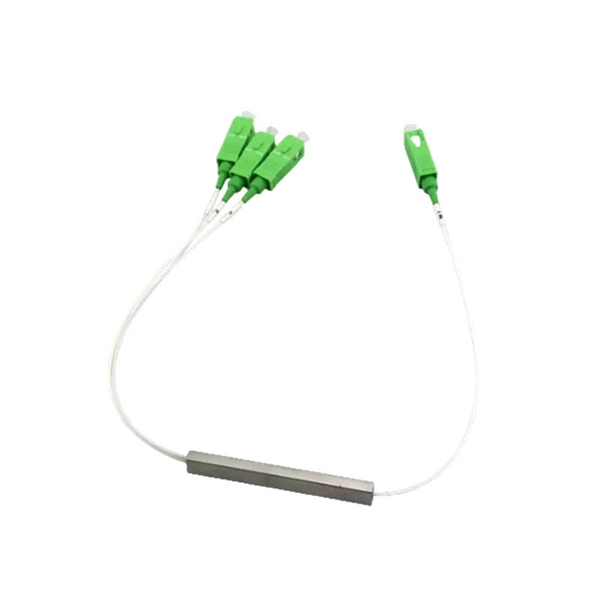
The local area network only has fiber optic cable
LANs (local area networks) use fiber optics primarily in the backbone but increasingly to the desk. The LAN backbone often needs longer distance than copper cable (Cat 5/5e/6) can provide and of course, the fiber offers higher bandwidth for future expansion. While fiber is still primarily limited to LAN backbones. A local area network (LAN) is a computer network that interconnects computers within a limited area such as a residence, campus, or building, and has its network equipment and interconnects locally managed. A basic fiber optic system consists of a transmitting device, which generates the light signal; an optical fiber cable, which carr es the light; and a receiver, which accepts the light signal transmitted.
-

What cross-sectional area of cable should be used for the small busbar
The cross-sectional area is A = I / J, where I is the rated current and J is the current density. For a 2000A copper busbar at 2. This could be achieved with 2 bars of 80mm x 10mm per phase (1600 mm2, allowing margin for heating). A Busbar Size Calculator simplifies this task by automatically determining the required cross-sectional area and dimensions according to international standards like IEC 61439 and NEC 366. Of course the maximum allowable temperature rise for each type of material is also important. Step-4: Round up to the nearest (close value) standard size (10 mm², 16 mm², 25 mm², 32 mm², 40 mm², 50 mm², 63 mm², 80 mm², 100 mm², 125 mm², 160 mm², 200 mm², 250 mm², 320 mm², 400. Calculate the required dimensions and current carrying capacity of bus bars for electrical distribution systems.
[PDF Version]
-

How wide is the area occupied by the optical cable trench
Trench: a cut (usually 2" to 6" wide, but sometimes much larger) is made with a chain blade (generally 2' to 6' deep) pulled through the ground by a tractor. Microtrenching is a method of installing fiber optic cables, HDPE ducts, and Microducts by creating a narrow trench, usually less than an inch wide and up to 12 inches deep. The trench is then filled with a special grout back-fill material that provides stability and support to the cable. Typical trench dimensions range from. 2 mm) and 8 in to 17 in deep (20. It can therefore be used both in and out of town.
-

Passive Optical Networking PON Local Area Network
A passive optical LAN, called POL or POLAN, is short for Passive Optical Local Area Network. It utilizes optical splitters to distribute data from one single source to multiple user endpoints. Not having a long history as a passive optical network (PON), it is a better replacement for copper-based LANs in local area networks. In practice, PONs are typically used for the last mile between Internet service providers (ISP) and their customers.