-
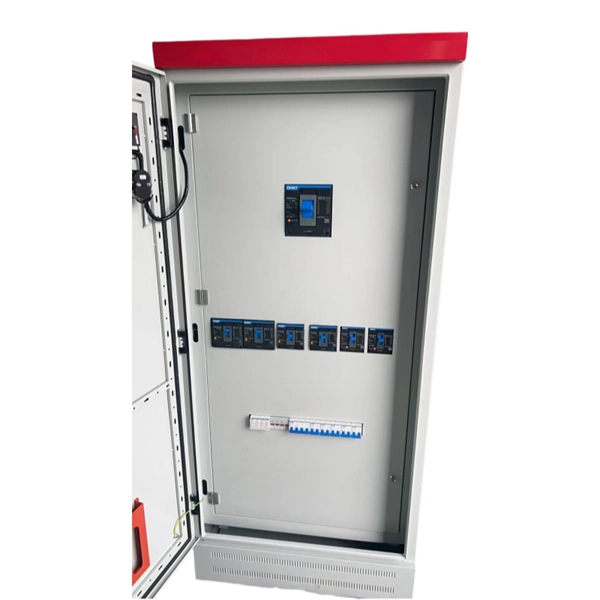
Switchgear main busbar and branch busbars
Main and branch bus sections distribute power between incoming, tie, and outgoing breakers. Busbar design within Medium Voltage (MV) switchgear is a critical aspect, fundamentally ensuring the safe, reliable, and efficient operation of power systems. These busbars are not merely simple current conductors; they serve as the strategic backbone, interconnecting various components within the. Busbar design in switchgear ensures safe, reliable power distribution by balancing current capacity, thermal performance, mechanical strength, insulation, and standards compliance. In most assemblies you will find horizontal main bars, vertical risers, neutral and equipment-ground buses, and purpose-designed. The busbars constitute the real “backbone” of every low voltage switchgear. Creating busbars generally involves machining, bending and shaping which require a high degree of expertise to avoid weakening the bars or creating stray.
[PDF Version]
-

Methods for sealing small busbars in high-voltage switchgear
Copper busbars, the essential conductors in electrical switchgear and distribution systems, require robust insulation methods to ensure safety, reliability, and longevity. Traditionally, heat-shrink tubing and epoxy resin coatings have been the two dominant techniques. Ready to Design a Reliable Busbar System? A busbar is a metal bar, usually made of copper or aluminum, that carries. Bus boot is flexible electrical insulating boot / shroud for busbar and switchgear connections upto 36KV. These pliable boots can be installed, removed or replaced in few minutes. more RHI masters the manufacturing process of every step. With fully equipped. Alcomets range of heatsrinkable sleeving includes HVBT, BPTM, Cable Caps and more. High voltage heat shrink busbar insulation tubings provide flashover protection against accidental bridging of straight or angled, rectangular and round HV busbars.
[PDF Version]
-

Where is the relay protection device for the high-voltage switchgear located
Switchgear for lower voltages may be entirely enclosed within a building. For higher voltages (over about 66 kV), switchgear is typically mounted outdoors and insulated by air, although this requires a large amount of space. Gas-insulated switchgear saves space compared with air-insulated equipment, although the equipment cost is higher. Oil-insulated switchgear presents an oil spill hazard. Switches may be manually operated or have motor drives to allow for remote control.
-

High and Low Voltage Switchgear Electrical Box
LV Switchgear is ideal for final distribution systems within buildings and small facilities. Think MCCs, HVAC systems, and indoor panels. Found in utility substations, power plants, and metro rail. Choosing between High Voltage (HV) and Low Voltage (LV) switchgear is critical for your power system's safety, cost, and performance. Pick the wrong one, and you risk equipment damage, unnecessary costs, or compliance issues. Fundamentally, these classes are defined by the specific voltage levels they are engineered to manage. It is the core component of the power system, so it is responsible for the control, protection and isolation of circuits and equipment, and is also used to regulate power flow, quickly cut off. This handbook is dedicated to electricians and future electricians, and explains the contents of high and low voltage switchboards.
[PDF Version]