-

Function of European Wavelength Division Multiplexers
Wavelength division multiplexing (WDM) is a technology for increasing the transmission capacity of optical fiber communications by sending multiple data channels simultaneously through a single fiber, each on a different wavelength of light. This technique enables bidirectional communications over a. 📦 For purchasing, use the RP Photonics Buyer's Guide for wavelength division multiplexing. It provides an expert-curated supplier directory, buyer-focused technical background information, and structured selection criteria to support professional procurement decisions. Wavelength division. Wavelength division multiplexers are fundamental to the functioning and performance of integrated photonic circuits, with applications ranging from optical interconnects to sensing and quantum technologies.
[PDF Version]
-

How does WDM Wavelength Division Multiplexing technology couple
A WDM system uses a multiplexer at the transmitter to join the several signals together and a demultiplexer at the receiver to split them apart. With the right type of fiber, it is possible to have a device that does both simultaneously and can function as an optical add-drop. In fiber-optic communications, wavelength-division multiplexing (WDM) is a technology which multiplexes a number of optical carrier signals onto a single optical fiber by using different wavelengths (i. There are different filtering technologies such.
-

What does the COM port of a wavelength division multiplexer mean
COM stands for Common Port, and it's the main interface for signal input or output in a WDM module. In MUX (Multiplexer) mode, the COM port outputs a combined optical signal composed of multiple wavelengths. This technique enables bidirectional communications over a. Wavelength Division Multiplexing (WDM) is a technique in fiber-optic communication systems that enables multiple optical signals with different wavelengths to be combined, transmitted, and separated over a single optical fiber.
-

Coarse Wavelength Division Multiplexer and Dense Wavelength Division
WDM systems are divided into three different wavelength patterns: normal (WDM), coarse (CWDM) and dense (DWDM). Coarse WDM provides up to 16 channels across multiple transmission windows of silica. Wavelength division multiplexing (WDM) is a technology for increasing the transmission capacity of optical fiber communications by sending multiple data channels simultaneously through a single fiber, each on a different wavelength of light. Learn all about CWDM, how it differs from DWDM, and whether a CWDM solution is right for your business's network. Although both technologies function by. The focus of this paper is on the basics of designing and deploying Coarse Wavelength Division Multiplexing (CWDM) systems based on modular Wave-Division-Multiplexing (WDM) technologies and pre-connectorized (“plug-and-play”) solutions.
[PDF Version]
-

Wavelength Division Multiplexing Fiber Transmission
Normal WDM (sometimes called BWDM) uses the two normal wavelengths 1310 and 1550 nm on one fiber. Coarse WDM provides up to 16 channels across multiple transmission windows of silica fibers. Dense WDM (DWDM) uses the C-Band (1530 nm-1565 nm) transmission window but. In fiber-optic communications, wavelength-division multiplexing (WDM) is a technology which multiplexes a number of optical carrier signals onto a single optical fiber by using different wavelengths (i. This makes it possible to scale capacity cost-effectively by using existing infrastructure more efficiently. SONET multiplexes large numbers of 64-kbps channels onto higher-rate datastreams.
-

How much does a Qatar wavelength division multiplexer cost
A WDM system uses a at the to join the several signals together and a at the to split them apart. With the right type of fiber, it is possible to have a device that does both simultaneously and can function as an. The optical filtering devices used have conventionally been (stable solid-state single-frequency in the form of.
-
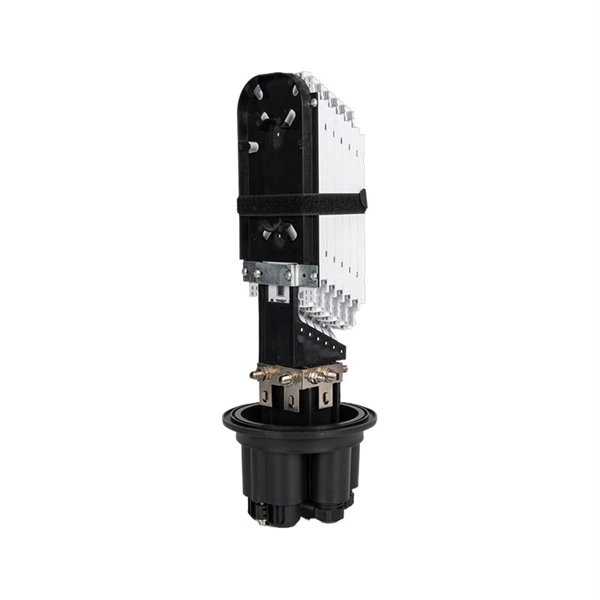
Multi-path wavelength division multiplexing
It is a method for combining multiple data signals onto a single optical fiber by assigning each data stream a distinct light wavelength. This technique enables bidirectional communications over a. Wavelength division multiplexers are fundamental to the functioning and performance of integrated photonic circuits, with applications ranging from optical interconnects to sensing and quantum technologies. The chapter begins with a quick historical account of the origin of optical communication and its exponential growth following the invention of erbium oped fiber amplifier (EDFA) leading to the widespread adoption of WDM. This makes it possible to scale capacity cost-effectively by using existing infrastructure more efficiently. Read on to learn the fundamentals of this useful technology. To begin with, we assume that we have the element parameters from a known process design kit (PDK).
[PDF Version]
-

Selection Guide for QSFP-DD Optical Receivers for Photovoltaic Power Plants
For form factor comparisons, check our QSFP-DD vs QSFP28 vs OSFP comparison. Here's everything you need to know at a glance. SR8 is the most affordable option but needs MPO-16 multimode support. DR4 provides maximum functionality through its ability to support multiple breakout. Choosing the right QSFP-DD transceivers is critical for any 400G or 800G network deployment. For network engineers and procurement managers, the challenge isn't just bandwidth—it's interoperability, thermal management, and selecting. The selection process requires you to select the proper optical module according to your existing fiber plant. The costs of SR8, DR4, FR4, and LR4 systems extend beyond their respective price points. Data centers experience weekly events that mirror John's story. As a. QSFP (Quad Small Form-Factor Pluggable) optical modules emerged to meet this demand, becoming a pivotal technology for data center interconnects due to their compact size and exceptional performance.
[PDF Version]
-
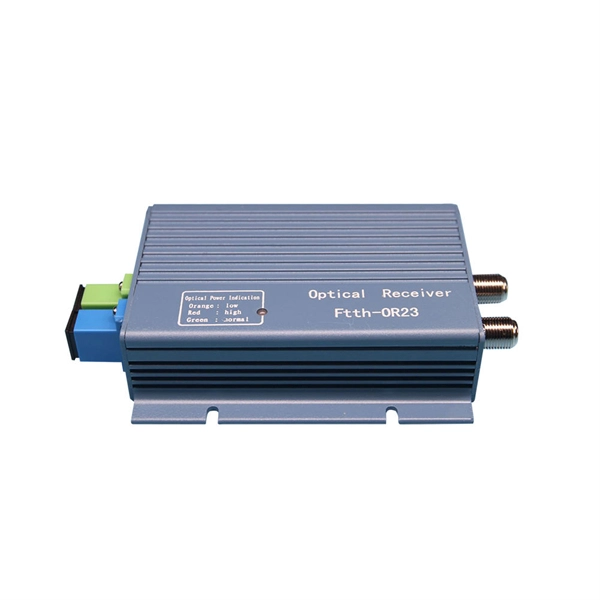
Indirect Modulation Wavelength Division Multiplexing
WDM systems are divided into three different wavelength patterns: normal (WDM), coarse (CWDM) and dense (DWDM). Normal WDM (sometimes called BWDM) uses the two normal wavelengths 1310 and 1550 nm on one fiber. Coarse WDM provides up to 16 channels across multiple transmission windows of silica fibers. OverviewIn, wavelength-division multiplexing (WDM) is a technology which a number of signals onto a single by using different (i.e., colors) of. A WDM system uses a at the to join the several signals together and a at the to split them apart. With the right type of fiber, it is possible to have a device that does both s.