-

Current Status of AI Server Manufacturers
Dell, HPE, Lenovo, and Supermicro are riding record AI server demand, but winning enterprise customers requires more than just Nvidia chips. With GPUs standardized around Nvidia, vendors compete on AIOps, liquid cooling, and deployment services as enterprises ramp up inference. Artificial Intelligence (AI) server manufacturers have experienced surging demand as data center operators require significantly more computing power than before the advent of ChatGPT and other Generative Artificial Intelligence (Gen AI) tools. Enterprises are investing billions of dollars in cloud. A comprehensive report by Global Market Insights Inc. projects the global AI server market was valued at USD 128 billion in 2024. 56 trillion in 2034, at a CAGR of 28. (US), Hewlett Packard Enterprise Development LP (US), Lenovo (Hong Kong), Huawei Technologies Co. Behind every smart AI algorithm is a powerhouse of raw computing: servers that process billions of calculations per second, data centers that consume as much power as small cities, and specialized hardware built to handle AI's relentless demands.
[PDF Version]
-

What modules does an AI server need
Specialized hardware is essential: AI servers require hardware to handle the intense computational demands of AI workloads. This includes understanding that components like GPUs, TPUs, and specialized memory (HBM) are what sets these servers apart. Some of these operations involve deep learning, image recognition, and natural language processing. Their capabilities go far beyond those of traditional servers: They are built to support workloads from training to deployment, and can manage massive (and continually growing) datasets, process. Train trillion-parameter LLMs, run advanced simulations, and more with dense AI GPU servers that deliver interconnect speed and efficiency for even the most ambitious AI workloads. As data centers expand AI capabilities, they face the challenge of supplying sufficient power while maintaining efficiency to manage costs. GitHub - codeproject/CodeProject.
[PDF Version]
-

AI server sales are booming
Dell targets $60 billion in AI server sales for the fiscal year 2026. Close partnership with Nvidia ensures priority access to Blackwell chips. Direct-to-chip liquid cooling is a key technological differentiator. The market is expected to grow from USD 167. 56 trillion in 2034, at a CAGR of 28. Market Leader: Nvidia Corporation led with over 31%. Dell is a tech titan with a substantial share in personal computers, servers, and storage arrays. Just. Hon Hai Precision Industry (FXCOF), widely recognized as Foxconn, delivered impressive second-quarter results with revenue soaring 39. Image:. Dell Technologies revises its outlook upward as demand for AI infrastructure transforms the traditional PC maker into a data center powerhouse, targeting $60B in AI server revenue. This was 88 percent higher than a year ago and GAAP net income rocketed up as well, by 256 percent from $965 million to, wait for it, $3. Its ISG (Infrastructure Solutions.
[PDF Version]
-

Composition of a single AI server
An AI server's architecture is all about precision engineering: high-speed interconnects, parallel processing via GPUs, and intelligent storage solutions that don't buckle under AI's relentless demands. Modern AI models are data-hungry, computation-heavy beasts that need specialized hardware just to function, let alone perform at their best. That's the job of an AI server—a custom-built system that keeps AI applications fast, scalable, and efficient. Using the NVIDIA DGX A100 as a primary reference, given its detailed documentation, and acknowledging the similar design principles. Indeed, the AI server market was valued at $38. 3 billion in 2023 and is estimated by Global Market Insights to have a CAGR of over 18% between 2024 and 2032. Understandably, the business models of organizations running AI/ML locally and those providing AI/ML-enabled cloud services rely on fast. This comprehensive guide aims to demystify the intricacies of server hardware for AI, providing a detailed comparison of CPUs, GPUs, and RAM. Picking the right processors will jumpstart your supercomputing platform and expedite your AI-related computing.
[PDF Version]
-
Portugal AI Server
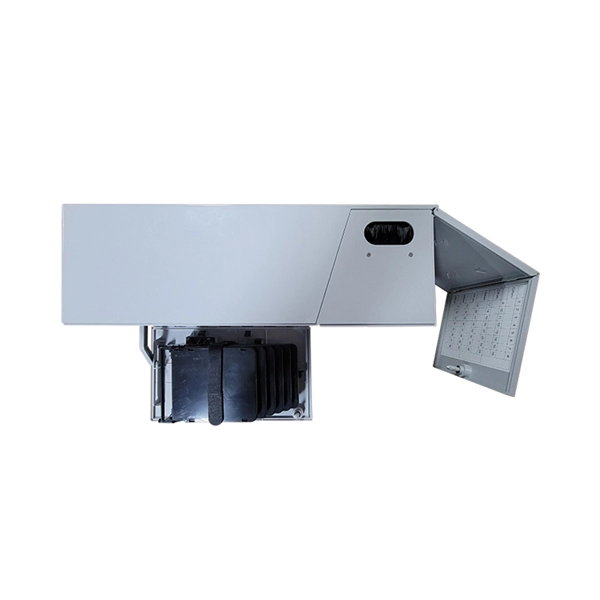
Microsoft has announced a landmark investment of more than US $10 billion to build a new artificial-intelligence-optimised data-centre complex near Sines, Portugal, as part of its global strategy to expand compute capacity and support large-scale AI workloads across Europe. High-Density GPU Computing Platforms, Specialized Deep Learning Clusters, and Tailored Enterprise AI Infrastructure for Portugal's Technological Transformation Deploy robust, high-availability architecture optimized for localized research, large-scale deep learning models, and complex AI pipeline. AIME is specialized in high-performance computing solutions tailored for artificial intelligence. From state-of-the-art HPC servers and workstations to a powerful AI cloud, we provide scalable, reliable, and efficient infrastructure for deep learning and high-performance computing needs. The Portugal facility. Portugal is gaining traction as a promising center for AI development in Europe, supported by a robust tech startup culture, growing investment from public and private sectors, and strategic government-led initiatives. The new facility, to be built along.
[PDF Version]
-

What is the Energy Internet of the Future
The Energy Internet is a proposed framework for maximising the efficient collection, distribution, and management of energy sources using networked computing and communication systems. Its features, such as plug-and-play mechanism, real-time bidirectional flow of energy, information, and money can lead to significant benefits and innovation in electricity production and. Leaders gathering at the World Economic Forum Annual Meeting 2026 will explore how emerging technologies could help to solve real-world challenges. Electricity is becoming the defining infrastructure of the 21st century. As industry, digital services and emerging technologies electrify, power. The German Federal Ministry of Economics and Technology also launched E-Energy (Internet of Energy) about the same time. From generation to transmission to distribution and consumption, the E-Energy paradigm emphasises digitally integrated, sustainable energy systems enabled by information and. The Internet of Energy (IoE) represents a significant evolution in energy management, integrating Internet of Things (IoT) technology with distributed energy systems.
[PDF Version]
-
What is a telecommunications tower platform
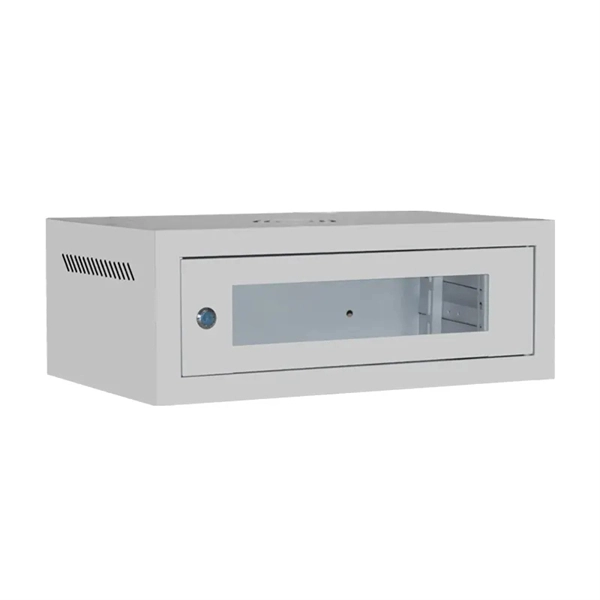
Telecommunication towers are the unsung heroes in a world powered by instant communication and data exchange. As essential infrastructure, these towers form the backbone for 3G, 4G, and 5G networks, ensuring reliable connectivity across both urban. Rooftop cell sites, also known as rooftop telecommunication towers, are critical for delivering high-speed mobile and internet services in space-constrained urban environments. Whether you're a telecom operator seeking efficient network solutions or a property owner exploring passive income through. Radio masts and towers are typically tall structures designed to support antennas for telecommunications and broadcasting, including television. They are among the tallest human-made structures. Masts are often named after the.
-
Micro-module service platform
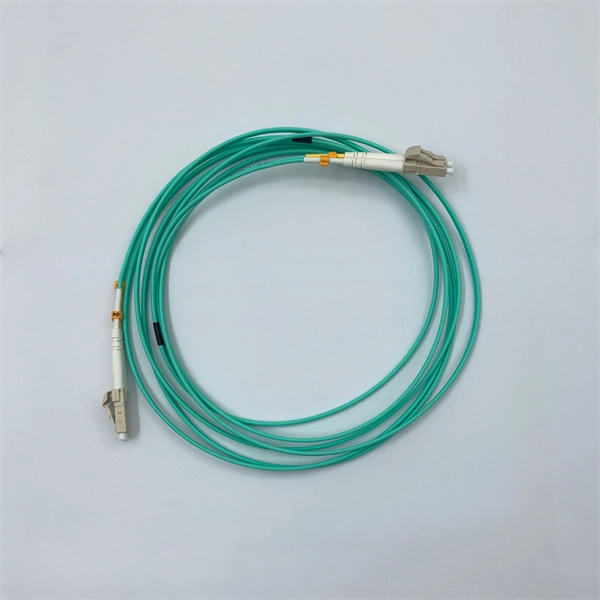
In software engineering, a microservice architecture is an that organizes an application into a collection of loosely coupled, fine-grained services that communicate through lightweight protocols. This pattern is characterized by the ability to develop and deploy services independently, improving modularity, scalability, and adaptability. However, it introduces additional complexity, particularly in managing distributed systems and inter-service communication, making the.
-
How much copper does an AI server need
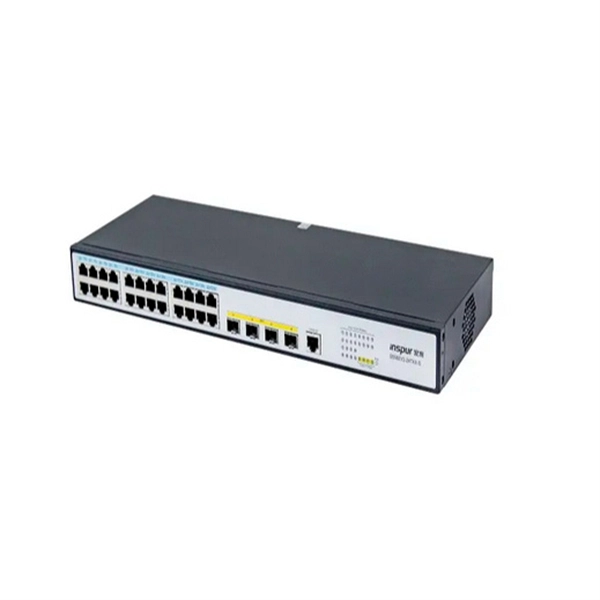
AI data centers require substantial copper - approximately 27-33 tonnes per megawatt of installed capacity, meaning a single 100-megawatt site can absorb several thousand tonnes. Copper may account for up to 6% of a data center's capital costs, but its role is essential. The metal's unmatched electrical conductivity ensures efficient power transmission, while its high thermal conductivity supports heat exchangers vital for cooling AI-intensive servers. That's why cables. Next generation AI campuses can swallow up to 50 thousand tons per site (copper. This is why AI infrastructure is becoming a materials story as much as a digital one. This also feeds my thesis that American sourced copper is. Traditional data centers: the kind that hosted cloud storage and basic web apps: required roughly 5,000 to 15,000 tons of copper for a typical 100-megawatt (MW) facility.
[PDF Version]